| Factor | Return | Z-Score | 5d Z | 20d Z | 63d Z | Category | Direction |
|---|---|---|---|---|---|---|---|
| Residual Volatility | -2.06% | z=-4.0 | z=-3.8 | z=-0.5 | z=+0.5 | Style | low volatility outperforms |
| Treasury | +0.83% | z=+3.4 | z=+2.3 | z=+1.7 | z=+0.2 | Theme | treasury exposure outperforms |
| Profitability | -0.39% | z=-2.1 | z=-1.9 | z=-1.6 | z=-1.1 | Style | unprofitable names outperform |
| Beta | -2.52% | z=-2.1 | z=-2.0 | z=-0.3 | z=+1.0 | Style | defensive names outperform |
| Oil | -1.38% | z=-2.0 | z=-1.1 | z=-0.7 | z=-0.2 | Theme | oil exposure underperforms |
| Semis | -0.86% | z=-1.4 | z=-0.6 | z=+0.5 | z=+2.2 | Theme | semiconductors exposure underperforms |
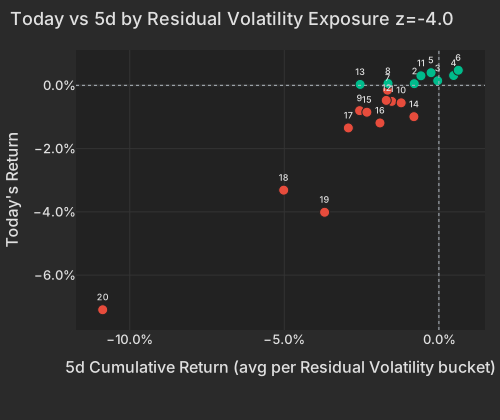
The Volatility factor extended an extreme multi-week decline to z=-4.0, dragging its 5-day reading to z=-3.8. The selloff concentrated in the semiconductor and AI hardware complex, which continued to unwind following last week's sector decline. Marvell (MRVL) fell -13.79%, and Arm Holdings (ARM) lost -11.84%. Micron (MU) shed -8.05%, logging a -4.62% drop in the final hour.
Retail investors liquidated high-performing chip positions ahead of the upcoming SpaceX IPO NYT, while major hyperscalers reported rising AI infrastructure costs. Consequently, capital systematically rotated out of crowded technology trades, forcing cyclical exposure notably lower and driving the Beta factor down to z=-2.1.
| Bucket | Ret 5D Pct | Today Ret Pct |
|---|---|---|
| 1 | -1.52 | -0.51 |
| 2 | -0.80 | 0.05 |
| 3 | -0.04 | 0.14 |
| 4 | 0.48 | 0.31 |
| 5 | -0.25 | 0.40 |
| 6 | 0.63 | 0.48 |
| 7 | -1.66 | -0.15 |
| 8 | -1.64 | 0.06 |
| 9 | -2.56 | -0.80 |
| 10 | -1.22 | -0.55 |
| 11 | -0.58 | 0.30 |
| 12 | -1.70 | -0.48 |
| 13 | -2.55 | 0.03 |
| 14 | -0.81 | -0.99 |
| 15 | -2.33 | -0.85 |
| 16 | -1.91 | -1.19 |
| 17 | -2.93 | -1.35 |
| 18 | -5.02 | -3.31 |
| 19 | -3.70 | -4.01 |
| 20 | -10.87 | -7.10 |
Capital rotated into duration and defensive yield. The Treasury factor surged to z=+3.4, continuing a sharp 5-day (z=+2.3) and 20-day (z=+1.7) trend. U.S. 10-Year Treasury yields fell 2.2 bps to 4.528% CNBC, lifting long-duration equity proxies.
The Real Estate sector gained +2.23%. Homebuilders participated, with the XHB ETF climbing +2.56% on 1.6× its typical daily volume, despite elevated mortgage rates. Consumer Staples rose +1.78%, bolstered by J.M. Smucker (SJM) gaining +11.95% after posting a fourth-quarter profit beat.
| ETF | Theme | Today | 1d Ago | 5d Ago | 20d Ago | 63d Ago |
|---|---|---|---|---|---|---|
| XHB | homebuilders | +2.56% | -0.21% | +0.06% | +0.76% | -1.82% |
| IYR | real estate | +2.19% | -1.42% | +1.49% | -1.64% | +1.86% |
| XLP | consumer staples | +1.69% | -0.44% | +1.27% | -1.32% | -3.37% |
| TLT | long-term bonds | +0.57% | -0.52% | -0.99% | -1.70% | -5.17% |
| XLK | technology | -4.90% | +2.15% | -5.92% | +4.93% | +31.78% |
| SMH | semiconductors | -5.79% | +5.00% | -1.59% | +5.58% | +51.67% |
The Oil factor declined notably to z=-2.0. WTI crude prices fell nearly 4% after the U.S. Energy Secretary reported vessel traffic recovering in the Strait of Hormuz as Iran and Israel halted strikes NYT. This de-escalation removed the risk premium from energy markets, countering previous macroeconomic models that projected a summer supply deficit FT.
Consequently, the SPDR S&P Oil & Gas Exploration & Production ETF (XOP) dropped -3.69% and the United States Oil Fund (USO) shed -4.58%. The unwinding energy narrative provided relief to energy-importing emerging markets and depressed the U.S. Dollar Index (DXY), which traded at 99.952, down -0.09% CNBC.
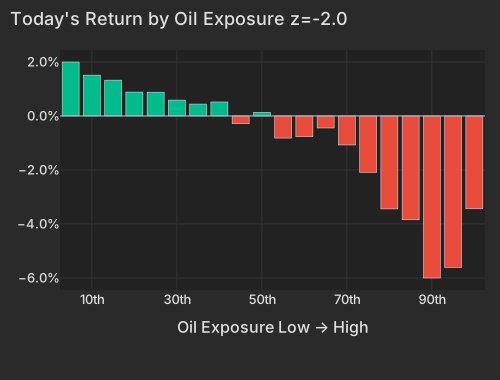
| Bucket | Avg Ret Pct |
|---|---|
| 1 | 2.00 |
| 2 | 1.51 |
| 3 | 1.33 |
| 4 | 0.89 |
| 5 | 0.88 |
| 6 | 0.59 |
| 7 | 0.44 |
| 8 | 0.52 |
| 9 | -0.29 |
| 10 | 0.13 |
| 11 | -0.82 |
| 12 | -0.77 |
| 13 | -0.45 |
| 14 | -1.08 |
| 15 | -2.09 |
| 16 | -3.44 |
| 17 | -3.85 |
| 18 | -6.00 |
| 19 | -5.61 |
| 20 | -3.44 |
Data compiled by FactorPulse AI; edited and verified by Jeff Klein. For informational purposes only. Does not constitute financial advice, an investment recommendation, or an offer to buy or sell any securities. Always consult a qualified financial professional before making investment decisions.
For more on factor construction methodology, see www.factorpulse.com/glossary.